Book club

Reading collection

Six books · November 2026

ROAR (Revised Edition) cover

ROAR (Revised Edition)

Stacy T. Sims with Selene Yeager

Rodale Books · 2024 · English

In ROAR (Revised Edition), Stacy T. Sims with Selene Yeager argues that women deserve training and nutrition guidance grounded in their physiology, rather than programs adapted from research on men. Connecting menstrual health, pregnancy, and menopause with strength, fueling, hydration, and recovery, the book encourages women to pursue performance through adequate nourishment, purposeful training, and attention to their individual responses.

Whole-book summary

ROAR builds its approach around the claim that women are not simply smaller men: hormonal changes and physiological differences can influence fuel use, fluid balance, temperature regulation, muscle maintenance, and recovery. Sims follows these concerns through the menstrual cycle, pregnancy, postpartum recovery, and the menopause transition, showing why a routine that once worked may need to change. Her recurring argument is that athletic progress comes from supporting the body’s demands rather than continually reducing food intake, body weight, or recovery time. Menstrual disruption, recurrent injuries, and persistent fatigue become meaningful signals to investigate, rather than inevitable costs of serious training.

The book translates this framework into guidance on resistance training, power, core stability, bone health, gut health, daily eating, endurance fueling, hydration, and exercise in challenging environments. It gives particular emphasis to preserving muscle and bone with age, matching carbohydrate intake to workload, distributing protein throughout the day, and making sleep and recovery part of training. Athlete stories and practical examples connect these principles to everyday decisions, while discussions of supplements, mental skills, and tracking tools encourage readers to ask what information or intervention actually serves their needs. The evidence is uneven in places, and specific protocols and individual success stories should be understood as the authors’ recommendations rather than universal outcomes. Ultimately, ROAR offers a framework for building lasting athletic capacity: understand your physiology, observe your own patterns, and measure success through strength, health, recovery, and performance.

Key ideas

Female physiology as a starting point

Sims argues that training guidance for women should begin with their physiology rather than scale down programs developed around men. She connects differences in hormones, body composition, oxygen delivery, fuel use, fluid balance, and joint mechanics with athletic preparation. Her framework asks readers to reconsider explanations for changing performance: fitness and effort matter, but so do physiological circumstances. Understanding those circumstances is presented as a way to make training more responsive while recognizing women’s capacity to develop strength and endurance.

Menstrual awareness without performance fatalism

The book treats the menstrual cycle as useful context for training, fueling, and recovery, rather than a calendar that determines athletic capability. Sims encourages tracking symptoms and responses over several months to discover individual patterns. Those observations may inform adjustments, but menstruation does not rule out excellent performance. The emphasis is on understanding what happens in a particular athlete’s body, including changes in effort and recovery, instead of assuming that everyone experiences the same limitations at the same point in a cycle.

Menopause calls for a changed athletic approach

Sims presents menopause as a prolonged transition affecting muscle maintenance, metabolism, sleep, mood, and temperature regulation. She argues that changes in performance or body composition need not indicate insufficient effort. Her proposed response combines heavy resistance exercise, brief sprint intervals, adequate carbohydrates, and protein distributed throughout the day. She also emphasizes recovery and everyday movement, including interruptions to prolonged sitting. The broader theme is adaptation: preserving athletic capacity may require changing familiar routines as physiological needs change.

Pregnancy and postpartum training have different demands

Pregnancy is presented as a reason to adapt exercise according to prior fitness, symptoms, comfort, balance, and medical circumstances. Sims connects continued activity with sufficient nourishment and acceptance of pregnancy-related weight gain, rather than maintaining prepregnancy performance or appearance. After birth, she distinguishes resuming exercise from returning to full training. The athlete research described in the material supports both the possibility of strong future performance and concern about postpartum injury, making gradual progression central to the book’s treatment of athletic motherhood.

Energy availability matters beyond finishing workouts

A recurring argument is that completing training does not establish that the body receives enough energy. Sims describes how other functions may be compromised before performance visibly declines. Nutritious ingredients, fullness, or a lower body weight therefore cannot independently establish that eating supports an athlete’s needs. She proposes judging progress through energy, strength, recovery, and menstrual health. This reframes nourishment as support for both exercise and ordinary bodily functions, rather than a variable to reduce whenever progress feels slow.

Strength, movement control, and skeletal resilience belong together

Sims links resistance training with muscle, power, independence, and endurance performance, while emphasizing that endurance fitness alone does not ensure strong bones. Her movement framework includes the glutes, hips, abdominals, and back, with stable alignment and controlled mobility taking priority over appearance or flexibility alone. Challenging resistance, appropriate impact exercise, and explosive movements serve different purposes within this approach. Adequate nutrition and hormonal health remain part of the picture; exercise selection alone is not presented as sufficient protection for the skeleton.

Dietary variety anchors the discussion of gut health

The gut microbiome is presented as participating in digestion, immunity, hormone metabolism, and communication with the brain. Within that broad account, the book’s central dietary emphasis is varied, fiber-rich food, including vegetables, legumes, and whole grains. It distinguishes probiotics, which provide live microorganisms, from prebiotics, which feed beneficial microbes. Fermented foods are not treated as compensation for an otherwise poor diet. The supplied material also acknowledges that microbiome science is developing, qualifying how confidently readers should interpret specific interventions.

Fueling should follow the demands of the day

Sims connects everyday eating with the specific requirements of exercise. She recommends distributing protein across meals and snacks, adjusting carbohydrates to workload, and planning food before and after demanding sessions. Easy activity generally requires less specialized preparation than long or hard efforts. Selene Yeager’s food diary illustrates how filling, nutritious meals can still leave an athlete short of fuel. Her reported improvements and later setbacks emphasize modest, sustained changes rather than assuming that a single dietary adjustment permanently resolves changing needs.

Hydration requires its own strategy

The book treats hydration as a distinct task from supplying exercise calories. Sims favors obtaining most exercise energy from food while using dilute carbohydrate-and-electrolyte drinks to support fluid absorption. Her approach accounts for intensity, heat, acclimation, hormonal stage, age, and experience instead of prescribing a fixed quota or replacing every sweat loss. The goal is to preserve the blood volume needed for cooling and performance while recognizing that excessive drinking can also create problems. Gradual rehydration after exercise forms part of this balance.

Environment changes the meaning of preparation

Heat, cold, altitude, and travel across time zones add demands that ordinary fitness preparation may not address. Sims recommends progressive exposure to the expected environment and coordinated attention to clothing, temperature management, food, fluids, and recovery. At altitude, the material emphasizes adjusted effort expectations and changing fluid and carbohydrate demands. For travel, it distinguishes general fatigue from circadian disruption and discusses shifting sleep timing and managing light exposure. Preparation therefore includes the conditions surrounding an event, not simply the work performed during training.

Recovery includes the rest of life

Sims presents recovery as the period in which training stress can produce repair and increased capacity. Adequate food, consistent sleep, and genuinely gentle movement are its foundations. Her account also includes work and household stress when evaluating total load, rather than treating exercise as an isolated demand. Mood, soreness, fatigue, and performance trends help indicate when to ease back. Recovery consequently requires more than completing a prescribed rest day: it involves assessing whether the athlete’s overall circumstances allow demanding training to be absorbed.

Supplements should answer a specific need

The supplement discussion places food, training, sleep, and recovery before pills or powders. Sims considers nutrients and performance supplements, including iron, vitamin D, magnesium, creatine, and beta-alanine, within an approach that asks what problem an intervention addresses. Her recommendation to investigate possible iron deficiency rather than automatically supplement illustrates this reasoning. Concentrated products are not assumed to reproduce the benefits of nutrient-rich foods, and higher doses are not equated with better results. Selection remains dependent on individual needs and exercise circumstances.

Mental preparation shapes athletic experience

The book treats motivation, supportive relationships, mindfulness, visualization, and constructive self-talk as trainable parts of athletic preparation. Sims encourages athletes to understand the purpose of workouts and examine setbacks through concrete influences such as preparation, conditions, nutrition, and recovery. This approach separates a performance outcome from a judgment of personal worth. Mental training is therefore both preparation for demanding situations and a method of interpreting experience afterward, with attention to confidence, athletic identity, and the social support surrounding an athlete.

Personal data becomes useful through decisions

In its later discussion of biohacking, the book asks readers to begin with a meaningful training or recovery question. Sims prioritizes personal trends, perceived effort, hormonal context, and how someone feels over generalized device scores or expensive testing. Tracking is valuable when it helps evaluate a change or choose an action; collecting more measurements is not itself progress. Testing one sleep or lifestyle change at a time provides a practical model of observation, while preserving a distinction between self-directed adjustments and findings requiring medical consultation.

Practical applications

Build a weekly plan around different demands

Use the book’s training categories to review whether a week includes challenging strength work, appropriate power or impact exercise, and enough easy or rest periods. Sims generally recommends two or three strength sessions weekly. Consider movement control and current readiness when selecting exercises, and include work and household demands when judging whether the schedule is recoverable.

Rehearse the full event nutrition plan

For a long or demanding event, practice the proposed food, portions, hydration, and eating opportunities during training. The supplied material emphasizes digestive tolerance and race-day nerves, so assess whether a plan is usable as well as nutritionally intended. Include preparation before the effort and replenishment afterward instead of concentrating only on what happens during the event.

Turn recipes into repeatable meal components

Use the appendix’s grain bowls, protein-enriched oatmeal, potato salad, spreads, and snacks as examples of making the nutrition framework practical. Prepare reusable components that make meals and training snacks easier to assemble. The recipes demonstrate varied textures and preparation methods; they should be read alongside the book’s emphasis on matching total nourishment to individual activity.

Run a focused personal observation

Choose one question, such as whether a sleep adjustment improves perceived recovery. Record the change alongside fatigue, mood, training effort, and relevant hormonal context, then compare with your usual patterns. This follows Sims’s preference for useful personal trends and one change at a time, while keeping a wearable score as one input rather than the decision itself.

Practice a constructive performance review

After a difficult session or competition, identify concrete influences: conditions, preparation, fueling, recovery, and the demands of the event. Use those observations to select a specific adjustment for future preparation. Pair the review with the book’s mental skills, such as visualization, present-moment attention, and encouraging self-talk, so reflection produces a workable next step rather than a judgment of personal worth.

Tensions and qualifications

Recommendations carry different levels of support

The supplied overview explicitly describes the evidence as uneven in places. Specific protocols and athlete stories therefore represent the authors’ recommendations and illustrative experiences, not universal outcomes or scientific proof. Claire’s, Tracy’s, and Selene’s experiences should retain their individual context rather than become standard meal plans or guaranteed results.

A female-centered framework still has limits

Population averages do not determine an individual athlete’s capabilities, including in the discussion of possible brain differences. Cycle-based scheduling is presented as a possibility rather than a settled rule. The introduction also acknowledges research-coverage limits, particularly for people using gender-affirming hormone therapy.

Health signals can exceed the scope of self-adjustment

The material identifies unexplained missed periods, heavy bleeding with persistent fatigue, recurrent stress fractures, persistent digestive symptoms, and suspected concussion as reasons for assessment. These concerns should not be absorbed into an ordinary training explanation. Similarly, symptoms suggesting iron deficiency warrant investigation rather than automatic supplementation.

Immediate relief and long-term adaptation can diverge

The book distinguishes feeling less sore from developing greater capacity. It cautions that immediate post-training cold immersion and antioxidant supplements may blunt desired adaptations even when an intervention offers short-term relief. Heat acclimation, pre-event cooling, and recovery treatments consequently need to be understood according to their different purposes.

Menopause treatment and training serve distinct purposes

Sims presents menopausal hormone therapy as an individualized option for symptom relief, rather than a body-composition treatment. That qualification matters within a discussion containing recommendations about muscle, metabolism, and performance: symptom management should not be read as a promise that a treatment will produce a particular physique or athletic outcome.

当呼吸化为空气 cover

当呼吸化为空气

保罗·卡拉尼什

浙江文艺出版社 · 2016 · Chinese

中文

在这部回忆录中,神经外科医生保罗·卡拉尼什被确诊罹患晚期肺癌,而此时,多年的训练即将让他拥有梦想中的事业与家庭生活。从照料临终患者到依靠他人照料,他探索了当未来变得不确定时,工作、文学、婚姻与父亲身份如何支撑生命的意义。

全书概览

保罗·卡拉尼什的回忆录讲述了他毕生探寻人类生命意义的历程:最初通过文学与神经科学,随后则通过医学在实践和道德层面提出的种种要求。神经外科让他置身于生物意义上的存活与个人身份的交汇处:挽救一个人的生命,也可能改变其语言能力、独立生活能力或个性,而这些恰恰使这个人能够认出自己。随着手术技艺日渐精进,在经历失去、与疲惫和冷漠抗争的过程中,他逐渐明白,好的医疗既需要精湛的技术,也需要理解每位患者珍视的事物。晚期肺癌的诊断骤然颠倒了他的角色,让他直面专业知识也无法消除的脆弱,并瓦解了他与妻子露西为之付出诸多牺牲的未来。

治疗曾让卡拉尼什短暂重返手术台,但癌症复发迫使他重新思考:当昔日的能力与抱负都已遥不可及时,他还能成为怎样的人。他的肿瘤科医生帮助他围绕有意义的活动来作决定,而不只是依据预计的生存时间;文学与信仰则为他提供了表达那些医学解释无法完全涵盖的体验的方式。尽管知道终将到来的分离会带来悲痛,他和露西仍选择生育一个孩子。为人父与写作成为他愿意倾心投入的事,而其价值并不取决于他还能继续多久。露西在后记中接续讲述了他最后的病程与死亡,展现出勇气可以与恐惧、眼泪、对他人的依赖,以及不得不放弃治疗并存。

这本书没有为死亡提供最终答案,也不保证苦难会带来智慧。它的力量来自在不确定中仍努力以负责而充满爱的方式生活:一边承认医学的局限,一边照顾患者;通过坦诚与相互关怀重建婚姻;在即将结束的生命中辨认幸福。书前的几篇文章与致谢将这段叙述延伸至他离世后在读者和亲人心中的回响,展现出一部未完成的手稿如何保存一段关系,并让关于如何生活的对话继续下去。

核心要点

意义不能仅靠生物学解释来理解

卡拉尼什在文学、神经科学与医学之间的探索,体现了他对身体过程如何构成有意义的人生这一问题的追寻。神经外科赋予这一问题现实的紧迫性,因为对大脑的干预可能影响人们认识自我所依赖的各种能力。这部回忆录将科学理解呈现为他工作中不可或缺的基础,同时也说明,科学理解为何无法穷尽他对如何生活的追问。这体现的是卡拉尼什探究问题的方式,而不是以科学论证证明某一种关于人生意义的解释是正确的。

生存只是医疗成功的一个维度

在卡拉尼什的叙述中,评价维持生命的意义,不能脱离患者自己认为什么样的生活值得珍视。语言能力、独立生活能力、人格、人际关系以及所珍视并愿意为之投入的事物,都可能影响治疗结果对接受治疗者意味着什么。因此,他逐渐形成的医学观,将技术判断与对个人优先事项的关注结合起来。医学上相似的情况,可能需要作出不同的决定;这并非因为临床证据变得无关紧要,而是因为患者对于治疗可能保留或改变的能力与可能性,可以有不同的重视程度。

沟通本就是照护工作的一部分

这部回忆录将倾听与解释视为实质性的医疗职责。患者及其家属需要帮助,才能理解不确定性、消化具有毁灭性打击的信息,并认识到各项决定涉及什么。对卡拉尼什而言,临床医生对病情的充分掌握,并不会自动转化为医患双方的共同理解。时间与用心之所以重要,是因为接收这些信息的人,生活刚刚发生了巨变。这样的叙述将沟通视为负责任的治疗的一部分,而不是把它描绘成出色外科技能之外令人愉快的附加之举。

即使能力有限,责任仍然存在

卡拉尼什的受训经历,揭示了追求卓越所带来的压力:与此同时,他也不断遭遇那些并非总能凭借技术与努力避免的结果。疲惫,以及变得冷漠的危险,使他对患者的承诺面临更复杂的考验。他的叙述试图寻找一种承担责任的方式,既不漠视痛苦,也不假定每一次失去原本都可以避免。谦逊成为持续服务于患者的必要条件:承认医学的局限,既能让医生继续认真承担责任,也不要求他们想象自己能够完全掌控疾病、损伤或死亡。

被推迟的人生可能与当下的亲密关系渐行渐远

卡拉尼什所期待的未来,有赖于完成一个个要求严苛的职业里程碑,而更充实的个人生活则被寄望于此后到来。露西的孤独动摇了这样一种假设:事业上的进展,终有一天会弥补他们婚姻当下的缺失。癌症让一再推迟的代价立刻显现,但这段关系的困难早在确诊之前就已存在。因此,这部回忆录探讨了,即使是值得追求的抱负,也可能遮蔽伴侣的需要;而重建亲密关系,需要的是坦诚与彼此关怀,而非寄望于即将取得的某项成就。

成为患者,改变了熟悉知识的意义

卡拉尼什能够识别令人担忧的医学征象,但专业上的熟悉,并不意味着他就能轻易承认这些征象对自己意味着什么。当他成为患者时,医院的空间与日常流程便获得了他先前身为医生时无法充分体会的意义。这种角色逆转揭示了一道鸿沟:从临床角度理解疾病,与亲身置于疾病带来的脆弱处境之中,并不相同。他的经历并不能证明医生无法理解患者;它所表明的是,依赖他人、恐惧,以及失去原本期待的未来,可能超出一个人仅凭专业知识所能准备好承受的范围。

随着身体所能做到的事情发生变化,自我认同也必须改变

治疗曾短暂地让卡拉尼什得以重返手术台,但癌症复发又一次改变了他能够承受的工作与生活。他的自我认同无法再完全建立在他为之接受训练的职业前景之上。这部回忆录记录了他如何通过外科医生、丈夫、作家和父亲这些彼此交织的角色与责任,努力理解自己。有意义的照护包括支持他重建自我认同,也包括让他能够安心地将责任托付给他人。由此形成的自我认同会随着能力的变化而调整,而不只是让他重新成为自己原本期待成为的那个人。

即使余生长短难以确定,仍有值得作出的选择

卡拉尼什的肿瘤科医生帮助他将注意力转向有意义的活动,而不是让对生存时间的估计成为他作出选择的唯一依据。统计数据可以为治疗提供参考,却无法决定哪些投入与责任能让他余下的人生可能性具有价值。这部回忆录将不确定性呈现为一种生活仍须在其中继续的处境,而不是一个必须先解开的谜题。工作、家庭和写作成为他可以切身投入的选择,即使他没有可靠的时间表,也无法保证自己的身体始终能够支撑这些计划。

文学与信仰为切身经历提供了表达的语言

在确诊前后,文学始终是卡拉尼什探寻意义的一部分;信仰也为他提供了一些表达方式,使他能够言说那些医学解释无法完全涵盖的经历。在所提供的叙述中,文学与信仰发挥着表达和诠释的作用:它们帮助他理解自我认同、苦难与生命的有限性。这部回忆录并未因此为某种宗教立场提供证明,也没有否定科学知识。相反,它描绘了一个人在面对同时涉及身体、人际关系与存在意义的问题时,如何借助不同的资源。

成为父母,让喜悦得以与预期中的失去并存

卡拉尼什和露西选择生育一个孩子,尽管他们知道,终将到来的离别会带来悲痛。他们的决定将爱与为人父母的价值,同这些投入可能加深的痛苦放在一起考量。女儿的到来带来了一种幸福,这种幸福不依赖于职业成就,也不依赖于一家人能够共同拥有漫长的未来。这部回忆录将其呈现为他们这一特定选择的意义,而不是适用于其他家庭的准则:在判断一段关系是否值得开始时,避免未来的悲伤并不是他们唯一的衡量标准。

停止治疗也可以表达仍在延续的人生追求

露西撰写的后记将叙述延续至卡拉尼什最后的病程与离世,展现了当进一步治疗能否带来益处尚不确定时,他所看重的事情如何影响决定。保持头脑清醒、获得舒适,以及与家人维系亲密联系,成为决定余下时光应如何度过的核心考量。这里的勇气也包含恐惧、泪水、依赖和放手。露西的描写表明,即使不再期待康复,人生仍可以有追求;而尊严也不取决于能否保持专业能力、情绪镇定,或始终愿意继续接受治疗。

文学遗产的延续有赖于他人的付出

在露西的悉心守护,以及致谢中提及的合作者与支持者的帮助下,这部未完成的手稿获得了延续的生命。出版既是为了读者,也承载着一个私密的心愿:希望他们的女儿能够了解自己的父亲。为本书撰写导读文字的人也讲述了他们在他去世后,通过阅读他的作品而与他建立的联系。这些后续文字将作者创作的故事拓展为一段共同关怀的叙事:保存一个人的声音,需要实际的工作、追忆和群体的支持;而最终成书的作品能够让关系延续,却无法消除催生这本书的那份失去。

阅读笔记

追踪“未来”的含义如何变化

留意“未来”如何从完成专业训练后有望获得的回报,转变为作出决定时充满不确定性的前景,再转变为由 Lucy 和他们的女儿延续下去的生活。这种不断变化的时间视角,有助于将职业抱负、疾病与丧亲之痛联系起来,也能避免在阅读时把确诊视为时间开始具有重大意义的唯一时刻。

从医患双方的角度理解同一家机构

比较 Kalanithi 提供医疗照护与接受医疗照护时,医院的空间和日常流程对他分别意味着什么。这里值得关注的差异在于亲身体验,而不只是身份的对调。留意这一转变,有助于理解这部回忆录如何让对临床工作的熟悉与自身的脆弱相遇,以及为什么知道医学上会发生什么,与知道自己亲身经历时会有什么感受,是两回事。

关注叙述声音的交接

阅读 Lucy 的后记时,要把它看作一次意义重大的转变:能够见证并讲述这个故事的人发生了变化。Kalanithi 无法在自己的叙述中讲述自己的死亡,也无法讲述她此后持续经历的丧亲之痛。她的文字拓展了全书的范围,同时保留了独特的视角,使读者得以通过这位在他离世后继续生活的人,看见他生命最后阶段最看重的事,以及这个家庭此后的生活。

将书中的其他文章视为回应

译者、Wu Chenghan 和 Abraham Verghese 分别描述了自己与 Kalanithi 及其作品的不同相遇经历。阅读这些文字时,应将其视为各自立足于特定处境的回应,它们展现了这本书持续产生的影响。他们的思考丰富了这部回忆录,但不能与 Kalanithi 自己的论述相互替代,也没有为他一生的意义确立一种唯一的权威解读。

留意纪念文字中的日常细节

Lucy 对 Kalanithi 胡须描写所作的俏皮纠正,在关于他的医学与文学成就的叙述之外,也保留了他日常生活中的一个特征。这类细节之所以重要,是因为追忆一个人时,很容易将其简化为一组堪为典范的品质。阅读致谢时,既要留意这种亲密的生活质感,也要关注使本书得以出版的实际支持网络。

需要留意的张力与限定

苦难并不保证带来任何启示

这本书既没有为死亡这一人生必然提供一个确定的答案,也没有保证苦难会带来智慧。Kalanithi 对意义的探寻始终属于他独特的个人经历,而且尚未完成。如果把他的经历理解为一条能够可靠地通向个人蜕变的道路,就是强加了一项承诺,而所提供的叙述明确没有作出这样的承诺。

临床信息与个人价值观回答的是不同的问题

对生存期估计所设的限制,并不意味着统计数据毫无用处,也不构成提供医疗建议的授权。这部回忆录区分了可为治疗提供参考的信息,以及关于什么使生命具有价值的判断。卡拉尼什对人生轻重缓急的取舍体现了这一区别,但并不能据此决定其他患者应当作出什么选择。

爱并不会消除悲痛

为人父、婚姻以及通过文学延续的生命赋予了人生意义,却无法消除分离的痛苦。露西与卡拉尼什之间持续存在的情感联结,不应被视为她已走出丧亲之痛的证据。后续内容让持久的爱与持久的失落得以并存于同一个人的生命之中。

个人见证并非普遍适用的处方

卡拉尼什对使命、信仰、为人父母以及临终的理解,源于他自身的处境;露西和为本书撰写导言的作者们也加入了各自的诠释。这些视角不必归结为一条统一的普遍准则。这部回忆录的力量,部分在于它保留了每一种意义究竟由谁体验、选择或诠释。

English

In this memoir, neurosurgeon Paul Kalanithi confronts terminal lung cancer just as years of training are about to yield the career and family life he imagined. Moving from caring for dying patients to depending on others for care, he explores how work, literature, marriage, and fatherhood can sustain meaning when the future becomes uncertain.

Whole-book summary

Paul Kalanithi’s memoir follows a lifelong search for what makes human life meaningful, first through literature and neuroscience, then through the practical and moral demands of medicine. Neurosurgery places him at the intersection of biological survival and personal identity: saving a life may also change the language, independence, or personality that makes it recognizable to its owner. As he develops surgical skill, encounters loss, and struggles against exhaustion and callousness, he learns that good medicine requires both technical excellence and an understanding of what each patient values. His diagnosis of advanced lung cancer abruptly reverses his position, exposing the vulnerability that professional knowledge cannot dispel and dismantling the future for which he and his wife, Lucy, have sacrificed.

Treatment briefly allows Kalanithi to return to surgery, but recurrence forces him to reconsider who he can be when his former capabilities and ambitions become inaccessible. His oncologist helps him orient decisions around meaningful activity rather than survival estimates alone; literature and faith offer ways to articulate experiences that medical explanation cannot fully encompass. With Lucy, he chooses to have a child despite the grief their eventual separation will bring. Fatherhood and writing become commitments whose value does not depend on how long he can continue them. Lucy’s epilogue carries the story through his final illness and death, showing courage as compatible with fear, tears, dependence, and the need to relinquish treatment.

The book offers no definitive solution to mortality or assurance that suffering produces wisdom. Its force comes from the effort to live responsibly and lovingly without certainty: to care for patients while accepting medicine’s limits, to rebuild a marriage through honesty and mutual care, and to recognize happiness within a life that is ending. The introductory essays and acknowledgements extend this account into its afterlife among readers and loved ones, showing how an unfinished manuscript can preserve a relationship and continue a conversation about how to live.

Key ideas

Meaning requires more than a biological explanation

Kalanithi’s movement between literature, neuroscience, and medicine reflects his search for how bodily processes become meaningful human lives. Neurosurgery gives that question practical urgency because interventions in the brain can affect capacities through which people recognize themselves. The memoir presents scientific understanding as essential to his work while showing why it does not exhaust his questions about living. This is the shape of Kalanithi’s inquiry, rather than a scientific demonstration that any single account of human meaning is correct.

Survival is only one dimension of medical success

In Kalanithi’s account, preserving life cannot be evaluated apart from the life a patient understands as valuable. Language, independence, personality, relationships, and commitments can all affect what a treatment’s outcome means to its recipient. His developing view of medicine therefore joins technical judgment to attention to individual priorities. Medically similar situations may call for different decisions, not because clinical evidence becomes irrelevant, but because patients can place different importance on the capacities and possibilities that treatment might preserve or alter.

Communication belongs inside the work of care

The memoir treats listening and explanation as substantive medical responsibilities. Patients and families need help understanding uncertainty, absorbing devastating information, and recognizing what decisions involve. For Kalanithi, a clinician’s command of the medical situation does not automatically create a shared understanding of it. Time and attention matter because information reaches people whose lives have just changed. This account makes communication part of responsible treatment, rather than presenting it as a pleasant addition to surgical competence.

Responsibility continues in the presence of limits

Kalanithi’s training exposes the strain of pursuing excellence while encountering outcomes that skill and effort cannot always prevent. Exhaustion and the danger of callousness complicate his commitment to patients. His account seeks a form of accountability that neither dismisses suffering nor assumes every loss could have been avoided. Humility becomes necessary to continued service: recognizing medicine’s limits allows responsibility to remain serious without requiring the physician to imagine complete control over illness, injury, or death.

A postponed life can lose contact with present relationships

The future Kalanithi anticipates depends on completing demanding professional milestones, with fuller personal life expected to follow. Lucy’s loneliness unsettles the assumption that career progress will eventually repair what their marriage lacks in the present. Cancer makes the cost of deferral immediate, but the relationship’s difficulties precede the diagnosis. The memoir consequently examines how worthy ambitions can still obscure a partner’s needs, and how rebuilding intimacy requires honesty and mutual care rather than reliance on an approaching achievement.

Becoming a patient transforms familiar knowledge

Kalanithi recognizes troubling medical signs, yet professional familiarity does not make their personal implications easy to acknowledge. When he becomes the patient, hospital spaces and routines acquire meanings that his earlier role could not fully disclose. The reversal reveals a gap between understanding disease clinically and inhabiting its vulnerability. His experience does not establish that physicians cannot understand patients; it shows how dependence, fear, and the loss of an expected future can exceed what expertise alone prepares someone to bear.

Identity must change as the body’s possibilities change

Treatment briefly makes a return to surgery possible, while recurrence again changes what Kalanithi can sustain. His identity cannot remain secured entirely by the professional future for which he trained. The memoir follows his effort to understand himself through overlapping commitments as surgeon, husband, writer, and father. Meaningful care includes support for this reconstruction and permission to entrust responsibilities to others. The resulting identity is responsive to changing capacities rather than simply a restoration of the person he expected to become.

An uncertain lifespan still contains decisions worth making

Kalanithi’s oncologist helps orient him toward meaningful activity rather than making survival estimates the sole basis of his choices. Statistics can inform treatment, but they cannot decide which commitments make his remaining possibilities valuable. The memoir presents uncertainty as a condition within which living must continue, rather than a puzzle that must first be solved. Work, family, and writing become choices he can inhabit without possessing a reliable timetable or an assurance that his plans will remain physically possible.

Literature and faith offer languages for lived experience

Literature remains part of Kalanithi’s search for meaning before and after his diagnosis, while faith also offers ways to articulate experiences that medical explanation cannot fully encompass. Their role in the supplied account is expressive and interpretive: they help him approach identity, suffering, and mortality. The memoir does not thereby supply proof of a religious position or dismiss scientific knowledge. Instead, it portrays a person drawing on different resources as the questions he faces become simultaneously bodily, relational, and existential.

Parenthood makes joy possible alongside anticipated loss

Kalanithi and Lucy choose to have a child knowing that eventual separation will bring grief. Their decision places the value of love and parenthood alongside the pain these commitments may intensify. Their daughter’s arrival brings a happiness that does not depend on professional accomplishment or a long future together. The memoir presents this as the meaning of their particular choice, not a rule for other families: avoiding future sorrow is not their only measure of whether a relationship is worth beginning.

The end of treatment can express continuing purpose

Lucy’s epilogue carries the account through Kalanithi’s final illness and death, showing how his priorities shape decisions when further treatment offers uncertain benefit. Mental clarity, comfort, and connection with family become central to what remaining time should hold. Courage here includes fear, tears, dependence, and relinquishment. Lucy’s portrayal makes room for purpose without an expectation of recovery, and for dignity that does not depend on maintaining professional capability, emotional composure, or an uninterrupted willingness to pursue treatment.

A literary legacy is sustained by other people

The unfinished manuscript acquires a continuing life through Lucy’s stewardship and the collaborators and supporters named in the acknowledgements. Publication serves both readers and the intimate wish that their daughter might know her father. The introductory contributors also describe relationships formed through encountering his writing after his death. These later materials broaden authorship into an account of shared care: preserving a voice requires practical work, remembrance, and community, while the resulting book can continue relationships without undoing the loss from which it emerged.

Reading notes

Track changes in what the future means

Notice how the future shifts from a promised reward for training to an uncertain horizon for decisions, and then to a life continued by Lucy and their daughter. This changing temporal perspective helps connect professional ambition, illness, and bereavement. It also keeps the reading from treating the diagnosis as the only moment when time becomes consequential.

Read the same institution from both sides

Compare the meanings hospital spaces and routines carry when Kalanithi provides care and when he receives it. The relevant contrast is experiential, not simply a reversal of status. Attending to that shift clarifies how the memoir brings clinical familiarity into contact with vulnerability, and why knowing what happens medically differs from knowing what it feels like personally.

Attend to the handover of narrative voice

Read Lucy’s epilogue as a consequential change in who can witness and tell the story. Kalanithi’s account cannot narrate his own death or her continuing bereavement. Her contribution extends the book’s scope while retaining a distinct perspective, allowing his final priorities and the family’s subsequent life to appear through the person who survives him.

Treat the surrounding essays as responses

The translator, Wu Chenghan, and Abraham Verghese describe different encounters with Kalanithi and his writing. Read these contributions as situated responses that demonstrate the book’s continuing influence. Their reflections enrich the memoir without becoming interchangeable with Kalanithi’s own argument or establishing a single authoritative interpretation of what his life means.

Notice ordinary details within the memorial

Lucy’s playful correction concerning the description of Kalanithi’s beard preserves an everyday feature alongside accounts of medical and literary accomplishment. Such details matter because remembrance can otherwise flatten a person into exemplary qualities. Read the acknowledgements for this intimate texture as well as for the network of practical support that enabled publication.

Tensions and qualifications

Suffering carries no guaranteed lesson

The book offers neither a definitive solution to mortality nor an assurance that suffering produces wisdom. Kalanithi’s efforts to find meaning remain particular and unfinished. Reading his experience as a reliable route to personal transformation would impose a promise the supplied account explicitly withholds.

Clinical information and personal values answer different questions

The limits placed on survival estimates do not make statistics useless or authorize medical advice. The memoir distinguishes information that can inform treatment from judgments about what makes life valuable. Kalanithi’s priorities illustrate that distinction without determining another patient’s appropriate choices.

Love does not cancel grief

Fatherhood, marriage, and literary continuity provide meaning without removing the pain of separation. Lucy’s continuing bond with Kalanithi should not be read as evidence that bereavement has been resolved. The later material allows enduring love and enduring loss to occupy the same life.

Personal testimony is not a universal prescription

Kalanithi’s understanding of vocation, faith, parenthood, and dying emerges from his circumstances; Lucy and the introductory contributors add their own interpretations. These perspectives need not become a single general rule. The memoir’s force depends partly on preserving who experiences, chooses, or interprets each meaning.

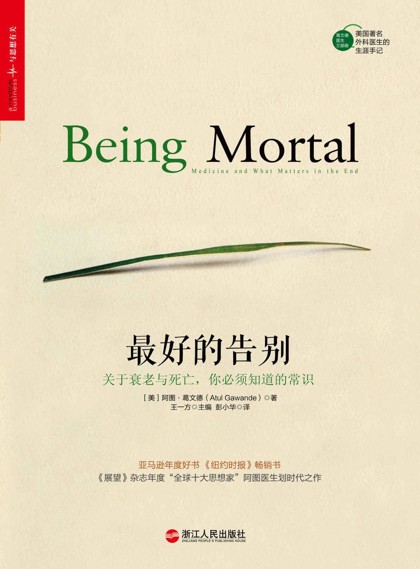
最好的告别 cover

最好的告别

阿图·葛文德

浙江人民出版社 · 2015 · Chinese

中文

在《最好的告别》中,外科医生阿图·葛文德探问:当衰老、虚弱或绝症使康复不再可能时,医学如何帮助人们好好生活。他通过患者的经历、养老照护的探索以及父亲生命的最后几年,提出照护应当守护那些让一个人余生值得度过的关系、选择和人生目标。

全书概览

阿图·葛文德审视了现代医学的一项核心缺失:延长生命的能力,已经超出了帮助人们面对依赖与死亡的能力。通过追踪老年人、重病患者和自己父亲的经历,他展示了即使治疗在技术上无可挑剔,如果医护人员只解释操作过程,却不讨论疾病可能如何发展,也不询问患者希望保住什么,照护依然可能失败。寿命延长和独立程度提高带来了实实在在的自由,却也暴露出现有照护安排的不足:人们往往只能在缺乏支持的自力更生与机构管控之间作出选择。

本书从衰老的现实问题谈起,逐步涉及养老院、辅助生活机构、临终关怀以及艰难的治疗抉择。葛文德描述了老年医学照护如何维持日常生活能力,也探讨了照护机构如何通过陪伴、隐私和有意义的责任,缓解孤独、无聊与无助。他着重区分了独立生活与主导自己人生的权利:人们即使需要大量帮助,仍然可以对自己的日常安排、人际关系以及愿意承担的风险保有决定权。安全和生存固然重要,却不足以单独界定什么样的人生值得过。

随着叙事转向绝症和父亲的离世,葛文德提出了一种医疗合作模式,其基础是围绕患者对病情的理解、恐惧、希望以及能够接受的取舍,反复进行坦诚的交谈。这些交谈既可以支持继续治疗,也可以支持停止治疗;目的在于,在危机使医疗干预成为默认选择之前,让照护服务于患者最看重的事情。临终关怀和姑息照护由此展现为积极支持生活的方式:缓解症状、参与有意义的活动,以及与他人共度时光。本书的重要之处,在于它将面对生命终点重新界定为医护人员、患者和家属共同承担的实际责任:承认局限,可以帮助人们更有目的地运用余下的选择。

核心要点

医学需要有超越延长生命的目标

葛文德认为,当康复已不再可能时,医疗的成功也应包括帮助人们保有自己认为值得过的生活。他对沉重治疗负担的叙述,揭示了技术上的成就与真正服务于患者自身目标的照护之间存在的差距。因此,问题不只是某项干预能否延长生命,还在于延长的生命可能要求患者付出什么,又能让患者保有什么。这是他对医学应承担何种责任的伦理论述,而不是断言延长生命的治疗本身就是错误的。

独立生活与主导自己的人生并不相同

通过祖父在印度得到他人支持的生活,以及美国老年人的经历,葛文德区分了事事亲力亲为与保有对自己人生的决定权。一个人即使在很大程度上依赖他人,仍然可以选择自己珍视的活动、人际关系和日常生活方式。反过来,一家机构即使提供了大量帮助,也可能剥夺这些选择。他更认同的衡量标准是人能否主导自己的人生:随着能力发生变化,人们是否仍能继续塑造自己的生活,而不是能否避免需要帮助。

衰老会缩小应对日常生活的余地

葛文德将衰老呈现为各种能力逐渐丧失的累积过程,而这些变化对实际生活的影响,可能被以疾病为中心的医学所忽略。平衡能力、食欲、对药物的耐受性、足部护理以及日常事务之所以变得重要,是因为小小的困难也可能削弱一个人料理日常生活的能力。在他的叙述中,老年医学照护关注的是这些相互影响的脆弱之处。它的价值部分在于保护人的生活能力与生活目标,即使没有任何单一诊断能够解释全部状况,也没有任何治疗能够逆转整体的衰退。

家也意味着对生活的掌控与归属感

爱丽丝·霍布森和其他需要依赖他人的老年人的经历,促使葛文德审视:当照护转入机构时,哪些东西会随之消失。隐私、熟悉的人际关系、日常的乐趣,以及对每日生活节奏的决定权,共同让一个地方有了家的感觉。提供住所和医疗监护,并不一定能够保留这些特质。他认为,应当从居住者的切身生活体验出发来评价照护安排,包括这个人在周围的世界中,是否仍然拥有一个自己能够认同的位置和角色。

照护必须让被照护者与照护者双方都能长久承受

通过家庭关系以及卢·桑德斯的经历,葛文德展现了一个人对他人的依赖如何使亲属承受难以招架的压力。感情并不能让持续不断的责任变得容易承担,也不能消除对可靠援助的需要。由此产生的困境是照护安排本身的问题,不能简单地归结为家人不够尽心。他的讨论将老年人的自由与照护者的承受限度联系起来:要支持前者,就必须承认后者,而专业帮助可以维系那些可能被缺乏支援的照护责任消耗殆尽的关系。

生活的意义也包括能够有所贡献

那些引入动物、植物、儿童以及小型家庭式生活共同体的养老照护实验,探索的不只是如何营造宜人的环境。葛文德借这些实验说明,要应对孤独、无聊和无助,就需要关注人际关系与生活目标。一个人在接受帮助的同时,可能发现已经没有任何人或事物需要自己。因此,除了有人陪伴,拥有照顾他人或事物、作出贡献以及作出能够产生实际影响的选择的机会,也可能十分重要。这些例子阐释了他对有意义的照护的理解;所提供的材料并未确立一套适用于每位居住者的通用方案。

机构的日常规程体现了对谁的生活更重要的取舍

Gawande 在讨论辅助生活型养老机构和养老院改革时,考察了机构的优先事项如何影响住户的自由。一套制度可以让工作人员的日常工作变得有章可循,却要求住户放弃自己在隐私、活动和作息时间方面的偏好。他主张采用能够让工作人员根据个人情况灵活提供支持的安排。这将关注点从个别的善意举动转向照护本身的设计:尊严能否得到保障,部分取决于日常规程是否为个人的优先事项留有空间。

知情同意需要理解治疗能够实现什么

患者可能听过某项手术的风险,却仍不了解疾病可能如何发展,也不清楚所提议干预措施的局限。Gawande 讲述了一位濒死患者接受手术后遭遇灾难性后果的经历,揭示了这两者之间的区别。他认为,有实质意义的知情同意需要讨论现实中可能出现的结果、需要承受的负担,以及医学仍然无能为力的事情。如果尚未帮助患者理解,手术可能带来的各种结果与他们希望保有的生活有何关联,那么仅仅介绍可以实施的手术是不够的。

医患合作既需要提供信息,也需要帮助理解

在后面讲述父亲患病以及一位晚期卵巢癌患者的经历时,Gawande 对临床医生的角色提出了更高要求。医生必须了解患者如何理解自己的处境、害怕什么、抱有什么希望,以及认为哪些牺牲可以接受,然后帮助他们理解,在充满不确定性的选项中,这些优先事项分别意味着什么。仅仅列出选择,可能会让不堪重负的人得不到所需的支持。他提出的模式将如实提供信息与给予指导相结合,同时在决定继续治疗还是放弃针对疾病本身的干预时,始终以患者的价值观为核心。

怀抱希望与做好准备可以并行不悖

Sara Monopoli 身患绝症的经历,帮助 Gawande 探讨了在持续治疗的同时推迟艰难对话所带来的后果。他认为,期待病情好转,并不意味着不能为很可能出现的恶化做好准备。如果希望自己的意愿能够影响事情的发展,就需要作出切实安排,包括在家中突发危机时能够获得的支持。由于病情和优先事项都可能改变,准备应当是一场持续进行的对话,而不是一次就能决定此后所有选择或消除不确定性的声明。

以舒适为重心的照护需要积极行动

在 Gawande 的叙述中,临终关怀与姑息治疗体现为切实的努力,目的是让余下的生命过得更好。缓解症状、协调药物管理、协助处理日常事务以及预防跌倒,都能帮助患者继续参与仍然重要的活动,并维系仍然重要的人际关系。他的论述挑战了这样一种假设:停止尝试控制疾病,就意味着照护已经结束。需要开展的工作发生了变化:当康复已不再可能时,临床医生和照护者会将努力转向保有患者的能力、减轻痛苦,以及帮助他们获得有意义的体验。

勇气也包括重新理解坚持的意义

在最后的内容中,Gawande 将勇气描述为直面生命终有尽头这一事实,并在结果不确定的情况下,仍然依照自己最看重的事情采取行动。父亲的离世,以及将父亲骨灰撒入恒河的经历,使这一关切从治疗决策延伸到了告别、尊重逝者意愿,以及代际之间的联结。当种种局限已无法回避时,坚持也可以意味着调整目标。这段经历支撑了他的思考:承认死亡的存在,可以让人更清楚地知道该如何生活、如何照护;但这并不意味着接纳死亡就能消除悲痛,或让每一次生命的终结都归于平静。

实际应用

将优先考虑的事项明确到足以指导决策

在权衡治疗方案之前,运用书中着重提出的问题,厘清当事人对自身状况的理解、恐惧、珍视的能力、期望,以及可以接受的牺牲。将这些回答与是否采取干预、采取何种干预的具体选择联系起来。情况发生变化时,应重新探讨这些问题,因为同样的优先事项,在某个阶段可能足以支持接受一项负担沉重的医疗操作,而在另一个阶段则可能支持以舒适为重的照护。

从平常一天的生活来评估照护

考虑照护环境时,要考察日常生活中能够保有哪些东西:隐私、自己喜欢的生活习惯、陪伴、有意义的责任,以及对可接受风险的选择权。评估时也要将医疗支持和安全纳入考虑。葛文德的例子提示我们,应当追问所提供的帮助是否保全了当事人自己的日常生活,而不是仅凭一种安排的看护能力来判断其好坏。

根据家庭实际能够持续承担的照护工作制定计划

在讨论老年人的意愿时,也要讨论照护在实际层面的要求,包括日常任务、持续承担的责任,以及病情恶化时所需的帮助。在疲惫不堪成为决定性因素之前,就要认识到照护者的承受限度。书中支持寻求可靠的协助,将其视为维持家庭照护和亲情联系的一部分,而不是把无私付出当作取之不尽的资源。

请临床医生将各种选择与可能的结果联系起来说明

不要停留在罗列医疗操作和风险上,而要进一步询问:一项干预在现实中能够达到什么效果,可能带来哪些负担,以及这些可能性与患者优先考虑的事项是否相符。也要纳入不再接受进一步针对疾病的治疗这一选项。在权衡这些取舍时寻求指导,因为葛文德认为,仅仅提供信息,可能会让患者及其亲属在缺乏充分支持的情况下独自承担决策的重担。

将临终意愿转化为切实可行的安排

趁还有时间组织支持时,讨论当事人的偏好,包括症状管理、居家协助,以及危机发生时如何应对。为当事人珍视的关系、活动和告别留出空间。书中后面的叙述强调,表达意愿与创造能够让意愿得到尊重和落实的条件,是相互关联却又有所区别的两项任务。

需要留意的张力与限定

安全与自由可能指向不同的方向

葛文德并不否定预防伤害或医疗监督的必要性。他质疑的是,将这些作为衡量照护的唯一标准。入住者、亲属和机构对于哪些风险可以接受,可能有不同的判断。因此,要让当事人保有主导自己人生的权利,就必须正视各方在一个问题上的分歧:为了获得保护,日常生活中的自由应当付出多大的代价。

家庭传统既带来归属感,也施加负担

印度与美国之间的对比,并不意味着传统的家庭照护就是一种毫无复杂之处的理想模式。所提供的叙述也涉及围绕财产、金钱和个人自由的义务与冲突。更大的独立性带来了切实的自由,同时也造成了难以弥补的支持缺口。

价值观明确,并不意味着结果确定

后续材料承认,治疗能带来多大益处仍不确定,亲人各自害怕的事情也可能不同。坦诚的对话可以为选择提供指引,却不能保证各方达成一致,也不能保证决定容易落实。葛文德的方法提供的是一种在不确定性中审慎商议的方式,而不是一种找出毫无痛苦或无可置疑地正确的决定的方法。

个人见证有其特定视角

致谢部分认识到,讲述疾病与失去亲人的经历需要承担责任,尤其是当其他人也共同经历了这些事情,并可能作出不同解读时。葛文德讲述的患者故事和家庭经历为他的论点提供了支持,但仍应将他的解读与已确立的事实或适用于每个人的结论区分开来。

照护模式需要结合文化背景加以转化

译后记将本书与正在面对家庭结构变化和老龄化的中国读者联系起来。它提出,专业养老照护与家庭责任有可能相辅相成。这将讨论拓展到了不同文化之间,但并不能据此认定,书中描述的具体安排可以原封不动地移植到其他文化环境中。

English

In Being Mortal, surgeon Atul Gawande asks how medicine can help people live well when aging, frailty, or terminal illness makes recovery impossible. Through patients’ experiences, experiments in eldercare, and his father’s final years, he argues that care should protect the relationships, choices, and purposes that make a person’s remaining life worthwhile.

Whole-book summary

Atul Gawande examines a central failure of modern medicine: its ability to prolong life has outpaced its ability to help people navigate dependence and dying. Following older adults, seriously ill patients, and his own father, he shows how technically competent treatment can still fail when clinicians explain procedures without discussing the likely course of illness or what patients hope to preserve. Longer lives and greater independence have brought real freedoms, but they have also exposed the inadequacy of care arrangements that leave people choosing between unsupported self-sufficiency and institutional control.

The book moves from the practical realities of aging to nursing homes, assisted living, hospice, and difficult treatment decisions. Gawande describes how geriatric care can preserve everyday abilities and how care settings can counter loneliness, boredom, and helplessness through companionship, privacy, and meaningful responsibilities. His central distinction is between independence and authorship: people may need extensive help while still retaining authority over their routines, relationships, and acceptable risks. Safety and survival matter, but they cannot alone define a worthwhile life.

As the narrative turns toward terminal illness and his father’s death, Gawande develops a model of medical partnership grounded in honest, repeated conversations about understanding, fears, hopes, and acceptable trade-offs. Such conversations can support further treatment or a decision to stop; their purpose is to make care serve the person’s priorities before a crisis makes intervention the default. Hospice and palliative care emerge as active ways of supporting life through symptom relief, meaningful activity, and time with others. The book matters because it reframes facing mortality as a practical responsibility shared by clinicians, patients, and families: acknowledging limits can help people use their remaining choices more purposefully.

Key ideas

Medicine needs a purpose beyond prolonging life

Gawande argues that medical success should include helping people retain a life they consider worthwhile when recovery becomes impossible. His accounts of burdensome treatment expose a gap between technical accomplishment and care that serves a patient’s purposes. The question is therefore broader than whether an intervention can extend life: it also concerns what that extension may demand or preserve. This is his ethical argument about medicine’s responsibilities, rather than a claim that life-prolonging treatment is inherently misguided.

Independence and authorship are different

Through his grandfather’s supported life in India and older Americans’ experiences, Gawande separates doing everything oneself from retaining authority over one’s life. A person may depend extensively on others while still choosing valued activities, relationships, and routines. Conversely, an institution can provide extensive assistance while removing those choices. His preferred standard is authorship: whether people can continue shaping their lives as their abilities change, rather than whether they can avoid needing help.

Aging changes the margin for everyday life

Gawande presents aging as an accumulation of losses whose practical consequences can escape disease-focused medicine. Balance, appetite, medication tolerance, foot care, and ordinary tasks become important because small difficulties can narrow a person’s ability to manage daily life. In his account, geriatric care attends to these interacting vulnerabilities. Its value lies partly in protecting functioning and purpose, even when no single diagnosis explains the whole situation and no treatment can reverse the overall decline.

Home is also a pattern of control and belonging

The experiences of Alice Hobson and other dependent older adults lead Gawande to examine what disappears when care becomes institutional. Privacy, familiar relationships, ordinary pleasures, and authority over daily rhythms help make a place feel like home. Providing accommodation and medical supervision does not necessarily preserve these qualities. He argues that care arrangements should be assessed through the resident’s lived experience, including whether the person still has a recognizable place and role in the surrounding world.

Caregiving must be sustainable for both people

Through family relationships and Lou Sanders’s experience, Gawande shows how dependence can place relatives under overwhelming pressure. Affection does not make continuous responsibility manageable or remove the need for reliable assistance. The resulting difficulty belongs to the care arrangement, rather than simply revealing inadequate devotion. His discussion connects the older person’s freedom with the caregiver’s limits: supporting one requires acknowledging the other, and professional help can sustain relationships that unsupported responsibility threatens to exhaust.

Meaning includes having something to contribute

The eldercare experiments involving animals, plants, children, and small household communities explore more than pleasant surroundings. Gawande uses them to argue that loneliness, boredom, and helplessness require attention to relationships and purpose. Receiving assistance may leave a person without anyone or anything that needs them. Opportunities to care, contribute, and make consequential choices can therefore matter alongside companionship. These examples illustrate his conception of meaningful care; the supplied material does not establish a universal formula for every resident.

Institutional routines express choices about whose life matters

Gawande’s discussion of assisted living and nursing-home reform examines how organizational priorities shape residents’ freedom. A system can make daily life predictable for staff while requiring residents to surrender preferences about privacy, activity, and timing. He argues for arrangements in which staff can adapt support to the person. This shifts attention from isolated acts of kindness to the design of care itself: dignity depends partly on whether everyday procedures leave room for individual priorities.

Consent requires understanding what treatment can accomplish

A patient can hear a procedure’s risks without understanding the likely course of illness or the limits of the proposed intervention. Gawande’s account of a dying patient’s disastrous surgery exposes this distinction. He argues that meaningful consent requires discussion of realistic possibilities, burdens, and what remains beyond medicine’s reach. Describing the available procedure is insufficient when the patient has not been helped to understand how its possible outcomes relate to the life they hope to preserve.

Medical partnership requires interpretation as well as information

In the later accounts of his father’s illness and a patient with advanced ovarian cancer, Gawande develops a more demanding role for clinicians. They must learn what patients understand, fear, hope for, and consider an acceptable sacrifice, then help connect those priorities to uncertain options. Simply presenting choices can leave overwhelmed people unsupported. His model combines honest information with guidance, while keeping the patient’s values central to decisions about further treatment or foregoing disease-directed intervention.

Hope and preparation can coexist

Sara Monopoli’s terminal illness helps Gawande explore the consequences of postponing difficult conversations while treatment continues. He argues that hoping for improvement need not prevent preparation for likely deterioration. Wishes require practical arrangements, including support when a crisis occurs at home, if they are to guide events. Because illness and priorities can change, preparation is an ongoing conversation rather than a single declaration that settles every later decision or eliminates uncertainty.

Comfort-focused care is active work

Hospice and palliative care appear in Gawande’s account as practical efforts to make remaining life more livable. Symptom relief, coordinated medication management, help with daily tasks, and fall prevention can support activities and relationships that still matter. His argument challenges the assumption that stopping attempts to control disease means care has ended. The relevant work changes: clinicians and caregivers direct their efforts toward preserving abilities, reducing suffering, and enabling meaningful experiences when recovery is no longer possible.

Courage includes changing what perseverance means

In the final material, Gawande presents courage as facing mortality and acting on priorities despite uncertain outcomes. His father’s death and the scattering of his ashes in the Ganges extend this concern beyond treatment decisions to farewell, honored wishes, and intergenerational connection. Perseverance can mean revising goals as limits become unavoidable. The episode supports his reflection that acknowledging death can clarify how to live and care; it does not promise that acceptance removes grief or makes every ending peaceful.

Practical applications

Make priorities specific enough to guide a decision

Use the questions emphasized in the book to clarify understanding, fears, valued abilities, hopes, and acceptable sacrifices before weighing treatment. Connect the answers to concrete choices about intervention. Revisit them when circumstances change, since the same priorities may justify a burdensome procedure at one point and comfort-focused care at another.

Assess care through an ordinary day

When considering a care setting, examine what everyday life would allow: privacy, preferred routines, companionship, meaningful responsibilities, and choices about acceptable risks. Include medical support and safety in that assessment. Gawande’s examples suggest asking whether assistance preserves the person’s own daily life, rather than judging the arrangement solely by its capacity to supervise.

Plan for the work a family can actually sustain

Discuss the practical demands of care alongside the older person’s wishes, including daily tasks, continuous responsibility, and help during deterioration. Recognize a caregiver’s limits before exhaustion becomes the deciding factor. The book supports seeking reliable assistance as part of maintaining family care and connection, rather than treating devotion as an unlimited resource.

Ask clinicians to connect options with likely outcomes

Move beyond a list of procedures and risks by asking what an intervention can realistically achieve, what burdens it may impose, and how those possibilities fit the patient’s priorities. Include the option of foregoing further disease-directed treatment. Seek guidance with these trade-offs, since Gawande argues that information alone can leave patients and relatives carrying decisions without adequate support.

Turn end-of-life wishes into practical arrangements

Discuss preferences while there is time to organize support, including symptom management, assistance at home, and responses to a crisis. Make room for the relationships, activities, and farewells the person values. The later accounts emphasize that expressing a wish and creating conditions in which it can be honored are connected but distinct tasks.

Tensions and qualifications

Safety and freedom can pull in different directions

Gawande does not dismiss injury prevention or medical supervision. He questions making them the sole measures of care. Residents, relatives, and institutions may judge acceptable risk differently, so preserving authorship requires confronting disagreement about what protection should cost in everyday freedom.

Family traditions offer belonging and impose burdens

The contrast between India and America does not make traditional family care an uncomplicated ideal. The supplied account includes obligations and conflicts over property, money, and personal freedom. Greater independence brings real liberties even as it creates difficult gaps in support.

Clear values do not make outcomes certain

The later material acknowledges that treatment benefits remain uncertain and loved ones may fear different things. Honest conversations can guide choices without guaranteeing agreement or easy implementation. Gawande’s approach offers a way to deliberate under uncertainty, rather than a method for identifying a painless or unquestionably correct decision.

Personal testimony has a perspective

The acknowledgments recognize the responsibility involved in recounting illness and loss, especially when others share the experience and may interpret it differently. Gawande’s patient stories and family narrative support his arguments, but his interpretations should remain distinguishable from established facts or conclusions applicable to every person.

Care models require cultural translation

The translator’s afterword connects the book to Chinese readers confronting changing households and aging. It presents professional eldercare and family responsibility as potentially complementary. This extends the discussion across cultures without establishing that the particular arrangements described in the book can be transferred unchanged.

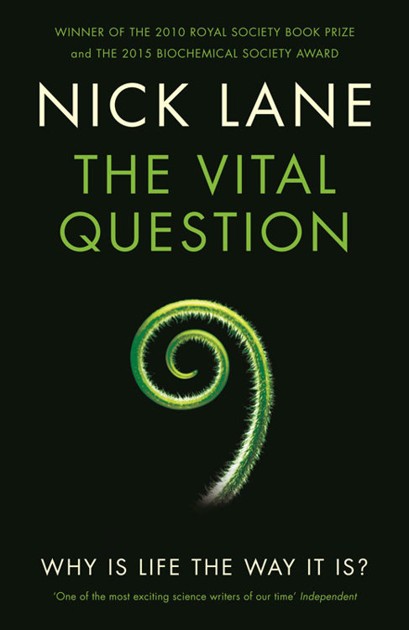
The Vital Question cover

The Vital Question

Nick Lane

Profile Books · 2015 · English

Nick Lane argues that energy — specifically the universal mechanism of proton gradients across membranes — is the master constraint that kept bacteria simple for two billion years and, once broken by a single improbable endosymbiotic event, unleashed the complexity of all eukaryotic life. The book traces this argument from life's chemical origins at alkaline hydrothermal vents through the emergence of the cell, sex, aging, and death, showing how a single bioenergetic logic underlies all of it.

Whole-book summary

The Vital Question opens with a puzzle that mainstream biology has largely sidestepped: bacteria dominated Earth for over two billion years yet gave rise to all complex life — animals, plants, fungi, and protists — exactly once, leaving no evolutionary intermediates and no explanation. Lane's answer is that this is not an accident of history but a consequence of physics. All life, he shows, conserves energy by the same strange mechanism: pumping protons across thin membranes to build an electrochemical gradient that drives a rotary molecular motor. This chemiosmotic coupling imposes a hard geometric constraint on bacteria — ATP synthesis scales with membrane surface area while protein costs scale with volume — trapping them in morphological simplicity no matter how metabolically inventive they become. The only escape was the acquisition of a bacterial endosymbiont (the ancestor of mitochondria) by an archaeal host, an event that internalized a dedicated bioenergetic membrane inside the cell and freed the resulting chimeric genome to balloon in size and complexity. Lane traces how every defining feature of eukaryotic cells — the nucleus, sex, two sexes, the germline/soma distinction, aging, and programmed cell death — flows as a cascade of consequences from that one endosymbiotic merger and the genomic instability it unleashed.

The book's architecture moves from the cosmic to the molecular and back. It begins at alkaline hydrothermal vents — warm, microporous, hydrogen-rich chimneys whose natural proton gradients across iron-sulfide mineral walls Lane treats as the direct ancestor of the membrane gradients all life still uses — and works forward through the emergence of LUCA, the deep split between bacteria and archaea, the singular origin of eukaryotes, and ultimately the mitochondrial logic of sex, speciation, and longevity. Lane weaves together thermodynamics, evolutionary genetics, structural biochemistry, and phylogenomics into a single coherent argument: that life is not primarily an informational phenomenon shaped by contingency, but a thermodynamic one shaped by the universal physics of proton gradients. The result is a book that reframes the most fundamental questions in biology — why life exists, why it is built the way it is, and why genuinely complex life may be vanishingly rare in the universe — around a single unifying principle.

Key ideas

Living requires continuous energy flow

Lane shifts attention from what organisms contain to the processes that keep them alive. Genetic information and elaborate structures cannot sustain themselves without a continuous supply of environmental energy. Local biological order is compatible with thermodynamics because organisms dissipate energy and export disorder as heat. Lane uses this framework to argue that explanations centered on genes and natural selection remain incomplete unless they also explain how particular forms of life can afford their ongoing energetic costs.

Proton gradients connect life's extraordinary diversity

The supplied account presents electron-transfer chemistry and membrane proton gradients as shared foundations of cellular energy metabolism. Electron transfers help establish an electrochemical gradient, which powers ATP-producing molecular machinery. Respiration therefore need not mean using oxygen: bacteria exploit many different chemical resources. Lane interprets the persistence of this common energetic arrangement across otherwise different organisms as evidence of a deep constraint. His further suggestion that similar mechanisms should characterize life elsewhere is an extrapolation from that terrestrial pattern.

An energetic setting for life's beginnings

Lane favors alkaline hydrothermal vents because they combine sustained chemical throughput, hydrogen-rich fluids, mineral catalysts, and microscopic compartments. Natural proton gradients across mineral walls could, in his account, have supplied energy before cells possessed sophisticated membranes and pumps. This addresses the problem of constructing machinery whose usefulness depends on other machinery already existing. The proposal also shifts emphasis away from a stockpile of organic ingredients toward a continuously powered environment, while leaving difficult chemical steps, including the reaction between hydrogen and carbon dioxide, unresolved.

Independence required an evolutionary bridge

A natural gradient could support early chemistry while also trapping it in dependence on vents. Lane proposes that a sodium-proton antiporter provided a bridge: converting an existing proton gradient into a sodium gradient could make active pumping advantageous before modern, tightly sealed membranes evolved. Bacteria and archaea then independently developed different solutions to cellular independence. This reconstruction illustrates his broader claim that energetic constraints can impose an order on evolutionary innovations, with an enabling adaptation making a previously unprofitable change selectable.

Size alone cannot purchase complexity

Lane identifies energy available per gene as the crucial limitation on bacterial complexity. Increasing cell volume raises the costs of maintaining cellular contents without proportionately increasing the membrane surface available for energy production. Giant bacteria are important to his argument because their many peripheral genome copies maintain relatively small local operating units. He reads their organization as evidence that becoming physically large does not automatically create the energetic surplus needed to support the genomic and structural elaboration characteristic of eukaryotes.

Endosymbiosis changed the energetic possibilities

Lane argues that the acquisition of a bacterial partner by an archaeal host transformed what a cell could support. The eventual mitochondria supplied internal energy-producing membranes, while extensive loss of endosymbiont genes reduced the expense of maintaining separate bacterial genomes. In his interpretation, this released energy for a much larger host genome and its activities. Complexity was consequently an opportunity opened by a merger, rather than an evolutionary destination toward which bacteria had steadily been progressing.

Mitochondrial genomes are a consequential compromise

The merger did not produce complete genetic consolidation. Lane argues that mitochondria retained a small set of genes because respiratory machinery requires rapid local regulation near an intensely charged membrane. Yet retaining genes also exposes them to damaging conditions and creates costs associated with their maintenance. The resulting division of responsibility between mitochondrial and nuclear genomes is therefore presented as an evolutionary compromise. It enabled complex cells while leaving them dependent on the continuing coordination of two genetically distinct systems.

The nucleus as a response to disruption

Lane connects the origin of the nucleus to genetic disorder following endosymbiosis. In his reconstruction, parasitic introns from the bacterial partner invaded the host genome, creating a need to process RNA before it reached protein-making machinery. Separating transcription and RNA processing from translation could prevent defective messages from being used prematurely. The nucleus thus appears in his argument as a response to a specific crisis, illustrating how protective measures against genomic disruption might subsequently become defining features of complex cells.

Sex as maintenance for unstable genomes

Lane treats sex as a solution to the difficulties of sustaining large, mutation-prone genomes. Whole-genome recombination could provide a scale of genetic repair and reshuffling that lateral gene transfer could not supply. He proposes that an early, unstable sexual population helps explain why eukaryotes share so many elaborate cellular traits. The suggested initial trigger is more tentative: mitochondrial free radicals might have encouraged membrane fusion, providing raw material that selection later developed into a reproductive system.

Inheritance links reproduction to mortality

Lane connects sperm and eggs, mitochondrial inheritance, and the separation of germ cells from body tissues within a common evolutionary argument. Reproduction benefits from exposing mitochondrial variation to selection, whereas functioning tissues benefit from limiting disruptive variation. Uniparental inheritance and an early protected germline are presented as responses to these competing requirements. In his account, preserving continuity through germ cells also helps explain the finite lives of bodies. Mating asymmetry may additionally reduce mitochondrial conflict and interference between chemical signals.

Cell death can enforce genomic compatibility

Because respiratory machinery draws on both nuclear and mitochondrial genes, cellular performance depends on their compatibility. Lane presents apoptosis as more than disposal of damaged cells: it can also eliminate cells whose combined genomes do not function well together. He extends this reasoning to development and reproductive failure, suggesting that some early miscarriages may involve such incompatibility. The argument introduces a difficult trade-off: stringent elimination may improve the quality of surviving offspring while reducing the number that survive.

Energy demand exposes reproductive incompatibilities

Lane uses mitonuclear matching to connect speciation with differences in reproductive vulnerability. A mismatch may become consequential first in the sex or tissue whose energetic demands approach mitochondrial capacity. The supplied material links this reasoning to Haldane's rule and cytoplasmic male sterility, presenting them as potentially related outcomes of metabolic limitations. This extends his argument beyond the origin of complex cells: the same inherited dependence on coordinated genomes may help shape barriers between populations and unequal reproductive consequences.

Longevity depends on regulation, not simply less activity

Lane challenges a simple picture in which free radicals only cause damage and lower metabolism necessarily preserves life. In his account, free radicals also signal the need to produce mitochondria and adjust energy supply. The supplied comparisons between birds and similarly sized mammals support his emphasis on respiratory efficiency and lower radical leakage rather than energy throughput alone. He connects aerobic performance with longevity through mitochondrial function, while treating antioxidant suppression of signaling as a possible source of harm.

Common beginnings may coexist with rare complexity

Lane separates the plausibility of life's origin from the probability of complex life. Widely available ingredients for alkaline vent chemistry could make microbial beginnings relatively accessible, while successful endosymbiosis and reconciliation of conflicting cellular systems could remain exceptional. The epilogue's single specimen, Parakaryon myojinensis, complicates any absolute claim of impossibility: it may represent another route toward complexity. Its significance remains tentative, supporting an open question about rare transitions rather than establishing a second origin of eukaryotic life.

Reading notes

Keep the molecular vocabulary precise

Use the supplied glossary distinctions to follow what each mechanism actually explains. Respiration should not become a synonym for oxygen use, and fermentation should not be folded into respiration. Likewise, distinguish archaea from archezoa. These distinctions matter because Lane's reconstruction depends on identifying particular energetic capabilities and ancestral relationships, rather than treating all simple organisms or energy-producing processes as interchangeable.

Compare explanations by their predicted patterns

Read Lane's criticism of oxygen-centered explanations as a comparison of expectations. He argues that an environmental opportunity alone does not explain why complex life shares a single ancestry instead of arising independently in multiple lineages. The interpretive task is to assess how well an explanation accounts for that pattern, while keeping his rejection of alternatives distinct from direct demonstration of his preferred mechanism.

Separate genealogical evidence from physical reconstruction

Track whether a claim rests on gene comparisons or on an argument about what an organism could energetically sustain. The supplied material emphasizes that lateral gene transfer complicates ancient microbial genealogies, especially when a single gene stands for an entire organism's history. Lane's physical reasoning offers another kind of constraint; reading the two together requires recognizing their different evidential roles.

Follow enabling changes without assuming foresight

When reading a proposed evolutionary sequence, identify the immediate benefit that makes each step selectable. The antiporter discussion makes this especially explicit. This approach also helps interpret Lane's accounts of cellular innovations as responses to existing problems. A later benefit does not by itself explain how an earlier intermediate could survive or why it first spread.

Read health implications through mitochondrial capacity

The later discussion should not be flattened into a universal regimen. The supplied material warns that increasing mitochondrial workload, including through ketogenic diets, can harm people with inherited or age-acquired mitochondrial dysfunction. Read proposed benefits of aerobic performance alongside this dependence on capacity, and distinguish the book's evolutionary explanation of longevity from an individualized treatment recommendation.

Tensions and qualifications

A coherent explanation is not complete experimental proof

Lane connects many phenomena through one energetic framework, but several connecting steps remain proposed reconstructions. The supplied material explicitly retains unresolved origin chemistry and tentative mechanisms for the beginnings of sex. Explanatory unity should therefore be distinguished from experimental establishment of every step in the sequence.

No known intermediates does not mean no possible transition

The absence of known bacterial-to-eukaryotic intermediates motivates Lane's structural-barrier argument. Yet the epilogue entertains a possible exceptional organism from a single specimen. These positions can coexist if the transition is extremely rare, but that specimen cannot settle its frequency or establish its evolutionary interpretation.

Necessity and contingency remain intertwined

Lane emphasizes physical constraints that narrow what evolution can achieve, while making complex life depend on an improbable historical merger. The tension is productive: energetics may explain why a successful transition needed particular features without making that transition inevitable or predicting precisely when it would occur.

Protective mechanisms carry evolutionary costs

The book repeatedly links protection at one level to loss at another. Germline preservation accompanies bodily mortality, and developmental elimination can improve compatibility while reducing fertility. These are evolutionary trade-offs in Lane's account, not evidence that suffering, reproductive loss, or death serves a consciously directed purpose.

Free radicals have context-dependent effects

The later argument assigns free radicals both damaging and regulatory roles. Consequently, neither eliminating them nor increasing mitochondrial activity is presented as uniformly beneficial. Lane's account depends on signaling, respiratory efficiency, genomic compatibility, and the relationship between energy demand and available capacity.

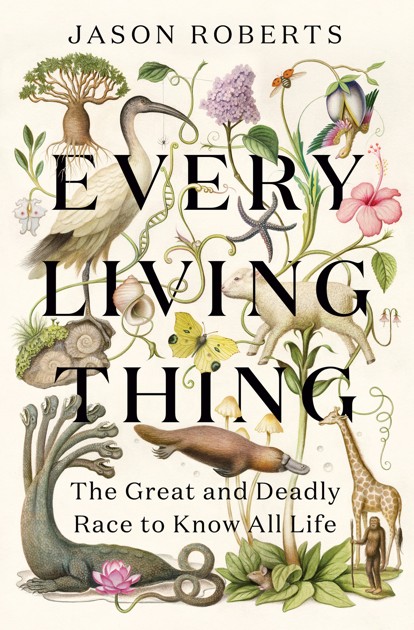
Every Living Thing cover

Every Living Thing

Jason Roberts

Random House · 2024 · English

Jason Roberts traces the rival ambitions of Carl Linnaeus and Georges-Louis Leclerc, Comte de Buffon, who sought to describe all living things but disagreed about whether nature could be understood through fixed categories. Following their influence into modern biology, he shows how scientific knowledge grows through observation and argument, while its accepted forms also reflect prestige, prejudice, political power, and historical chance.

Whole-book summary

Every Living Thing centers on two eighteenth-century naturalists whose shared ambition concealed a profound disagreement. Linnaeus developed an efficient system of classification and two-part scientific names, making the bewildering diversity of life easier to record and discuss. Buffon’s expansive Histoire Naturelle emphasized organisms’ histories, environments, reproduction, and relationships, warning that convenient categories could become substitutes for understanding. Roberts follows their contrasting paths through poverty and inherited wealth, patronage, religious censorship, collecting expeditions, family disappointments, and extraordinary intellectual discipline. Both emerge as gifted, fallible people whose scientific achievements were inseparable from their ambitions and circumstances.

The narrative then follows their contested legacies through the French Revolution, European imperial expansion, evolutionary theory, genetics, and contemporary biology. Linnaeus’s naming practices became indispensable scientific infrastructure, but the authority attached to classification also helped give racial stereotypes the appearance of natural fact. Buffon challenged fixed human divisions and slavery, while advancing ideas about deep time, extinction, and species change, although his work contained prejudices and errors of its own. His later eclipse reflected institutional struggles, selective acknowledgment, and distorted editions as well as scientific disagreement. Through figures including Lamarck, Cuvier, Darwin, Mendel, and the Huxleys, Roberts examines why some explanations gain authority while others languish or disappear.

The book’s larger argument concerns the tension between humanity’s need for shared names and nature’s resistance to permanent boundaries. Evolution, genetic discoveries, symbiosis, and unconventional organisms reveal a living world whose relationships and variability exceed any finished catalogue. Roberts recognizes the enduring usefulness of Linnaeus’s achievement while recovering the force of Buffon’s insistence that systems must remain answerable to evidence. The result is a history of biology that asks readers to distinguish organizational convenience from natural truth—and to recognize how scientific categories shape attitudes toward other people, other species, and the environments they share.

Key ideas

Naming makes knowledge shareable

Linnaeus’s enduring achievement was to make organisms easier to identify, record, and discuss through standardized names and accessible rules. Roberts distinguishes this practical success from the claim that a classification reveals nature’s permanent structure. A system can support international cooperation even when its underlying assumptions are mistaken. The later growth of scientific societies, collections, and publishing shows how naming became infrastructure: its durability depended on widespread use and institutional support as well as intellectual ingenuity.

Categories can conceal their own assumptions

Buffon challenges the movement from organizing observations to treating an organizing scheme as natural truth. Selecting reproductive organs, appearance, or another characteristic as decisive requires choices that can become invisible once a system gains authority. Roberts develops this problem through inherited hierarchies, uncertain plant identifications, and organisms that resist familiar divisions. The issue is not whether categories have uses, but whether their apparent precision discourages investigation of the evidence and variation they leave unexplained.

Natural history requires relationships and context

Buffon’s alternative emphasizes organisms’ environments, reproduction, histories, and connections. His arrangement of animals around human familiarity also reveals that his own presentation has a standpoint. Roberts returns to this relational approach in the book’s later account of evolution, genetic discoveries, symbiosis, and biological networks. The concluding argument is that understanding life requires attention to processes and interdependence alongside named organisms. A catalogue can organize knowledge without exhausting the relationships that make its entries intelligible.

Scientific opportunity has material conditions

The contrasting beginnings of Linnaeus and Buffon make scientific achievement inseparable from resources. Linnaeus depends on patrons, shelter, credentials, employment, and access to gardens; Buffon’s inherited fortune enables independence and sustained experimentation. Institutions can obstruct inquiry or create protected spaces for it, as the Jardin illustrates. Roberts presents neither career as inevitable. Talent matters, but its development depends on timely assistance, social position, and the practical arrangements that allow someone to keep working.

Authority grows through performance and allegiance

Scientific standing in Roberts’s account involves charisma, spectacle, personal loyalty, and control over recognition. Linnaeus attracts students while guarding his authority over names; Buffon builds public influence through experiments and literary accomplishment. Their achievements coexist with self-promotion, rivalry, and selective skepticism. Later disputes involving Cuvier and Lamarck extend the pattern. Roberts asks readers to separate an explanation’s evidential strength from the confidence, prestige, or institutional position of the person advancing it.

Collecting distributes costs and credit unequally

The expansion of natural history depends on travelers whose illness, poverty, dangerous journeys, and deaths complicate the image of discovery as individual triumph. Linnaeus’s students supply specimens under conditions that expose the limits of their support and their mentor’s responsibilities. Adanson’s experience in Senegal challenges European prejudice and encourages respect for Indigenous naming. Across these accounts, Roberts connects collecting to unequal authority over whose knowledge counts, whose labor becomes visible, and who receives lasting recognition.

Human classification can authorize inequality

Roberts traces how Linnaeus’s geographic color categories and racial stereotypes acquired the appearance of scientific objectivity. Later material involving Cuvier and Agassiz shows scientific prestige lending authority to racial hierarchy and policy. Buffon’s emphasis on shared reproductive capacity supports his argument for common human origins and against racial divisions and exploitation. The book nevertheless qualifies his position by acknowledging prejudiced sources and errors. Opposition to one hierarchy does not place a thinker beyond historical scrutiny.

Deep time unsettles a finished creation

Fossils, extinction, anatomical similarities, and environmental variation challenge the picture of life as a permanent collection of separately created species. Buffon’s account makes immense timescales and historical change central to understanding nature, provoking religious condemnation and strategic accommodation. Roberts presents this as an important opening toward evolutionary thinking while preserving its limits: Buffon entertained transformation and possible common descent without establishing a developed evolutionary mechanism. His significance lies partly in making change a serious explanatory problem.

Evolution and inheritance are different questions

The later narrative distinguishes explanations of species change from explanations of how characteristics pass between generations. Darwin’s natural selection concerns the persistence of advantageous variations through survival and reproduction; his pangenesis addressed inheritance. Roberts also complicates a simple opposition between Darwin and Lamarck by noting Darwin’s acceptance of some inherited changes associated with habit, use, and disuse. Mendel’s controlled experiments and sustained records introduce another approach, showing how repeatable patterns could reveal inheritance processes overlooked by prominent contemporaries.

Scientific memory is politically remade

The French Revolution transforms the Jardin’s identity and allows Linnaeus’s followers to present their approach as democratic while diminishing Buffon. Lamarck helps preserve the institution by emphasizing public benefits and shared governance, even as science becomes entangled with imperial conquest. Roberts extends this account of contested memory through distorted editions, selective acknowledgment, and the neglect of earlier contributions. A thinker’s later reputation is therefore part of the history requiring explanation, rather than a reliable measure of original achievement.

Anomalies expose the limits of inherited systems

The platypus and microscopic life challenge classifications that had become institutionally entrenched. Later attention to fossils, inheritance, and DNA further shifts inquiry beyond outward resemblance toward evolutionary relationships. Roberts also questions the symbolic authority attached to a taxonomic reference specimen when it is treated as an ideal embodiment of a species. These examples show how useful conventions can become misleading if exceptional organisms and new forms of evidence are forced into categories designed before they were understood.

Knowledge must survive its makers

The naturalists’ later lives make succession a scientific problem. Linnaeus’s support for his indifferent son and restrictions on his talented daughters expose how family privilege and gender shaped opportunity. Buffon’s unfinished undertaking leads him toward successors, collections, publication, and public education as means of continuity. Alongside illness, grief, and companionship, Roberts presents knowledge as work sustained across generations. Neither personal greatness nor family inheritance alone can ensure that observations, institutions, and unfinished questions remain available.

Recognizing diversity changes what can be protected

The closing material connects classification’s limitations to the recognition of biological diversity and conservation risk. Broad species labels can conceal distinctions that matter when assessing the vulnerability of living populations. Buffon’s later questioning of natural abundance also challenges the assumption that nature offers inexhaustible resources. Roberts’s broader argument links intellectual habits with human relationships to other species: attending to variation, environmental history, and interdependence can reveal consequences that an apparently complete inventory leaves out.

Reading notes

Track what would change an explanation

When assessing a scientific dispute in the narrative, identify the observation each participant relies on and the assumptions connecting it to a conclusion. Cuvier’s use of stability under particular conditions is especially revealing: it does not settle what might happen in different environments or over longer periods. This reading approach keeps the scope of evidence visible.

Notice how communication is tested

Buffon’s writing practice offers a concrete application supported by the material: ask a reader or listener to explain an argument back, then revise where understanding breaks down. His combination of vivid prose, anatomical detail, and repeated revision makes communication part of intellectual work. Read his literary ambition as connected to the demands of explaining complex observations.

Read mentorship through obligations

Compare the help that sustains the young Linnaeus with the support he later provides his own students. Food, shelter, access, preparation, and protection make the comparison concrete. His genuine grief and occasional generosity complicate the picture, but do not erase the demands he places on collectors or his harshness toward students who seek independence.

Check which textual version survives

The accounts of Buffon’s recantation and later distorted publications make textual transmission part of interpretation. Distinguish a public statement made under pressure from a substantive revision, and an author’s arguments from what later editions preserve. Roberts’s treatment of historical erasure invites attention to how censorship, editing, and selective acknowledgment shape the apparent history of an idea.

Use scientific sites as complementary evidence

The book’s visitor guide distinguishes working environments from preserved collections: gardens, homes, museums, and archives illuminate different aspects of the naturalists’ lives. It describes seasonal access for Linnaeus’s garden and Hammarby residence, and advance arrangements for Linnean Society materials. Treat these details as information supplied by the book, rather than as independently verified current visiting conditions.

Tensions and qualifications

Usability and completeness remain in tension

Buffon’s criticism leaves a practical challenge: an alternative must still organize abundant evidence. Adanson’s comprehensive approach makes the difficulty especially visible. Greater attention to complexity can improve understanding while delaying or overwhelming the construction of a system that others can readily use.

Productive speculation is not established discovery

Buffon’s internal matrix addresses questions about development, resemblance, and variation, but Roberts presents it as speculative. His mistaken observations do not become sound evidence because some questions proved fruitful. Likewise, proposing species transformation should not be equated with establishing its mechanisms.

Conduct, reporting, and interpretation require separation

The supplied account describes Linnaeus’s expedition reporting as combining discoveries, prejudice, exaggeration, and fabrication. Those assessments should remain attributed to Roberts’s narrative. His larger interpretation of ambition and credibility should not turn every reported observation into a falsehood or every scientific contribution into an endorsement of its maker’s conduct.

Intellectual courage can coexist with accommodation

Buffon preserves controversial arguments through public recantation and protective religious language. This complicates a simple portrait of either fearless resistance or complete submission. Roberts’s account distinguishes the constraints governing public expression from the continued presence of challenging ideas in the published work.

Support does not mean complete agreement

Jussieu can encourage Linnaeus without accepting his system, just as Huxley can defend Darwin while retaining doubts about mechanisms and recognizing earlier thinkers. These relationships qualify a history organized around rival camps: intellectual generosity, public allegiance, and scientific agreement can overlap without becoming identical.

How Not to Die cover

How Not to Die

Michael Greger with Gene Stone

Flatiron Books · 2015 · English

Michael Greger argues that everyday habits, especially a diet centered on whole plant foods, can substantially influence the risk and course of many chronic diseases. Combining a disease-by-disease survey with his practical Daily Dozen checklist, he turns that argument into an approach to eating and living while emphasizing prevention, informed medical decisions, and the limits of any promise of longevity.

Whole-book summary

How Not to Die makes the case that many illnesses commonly associated with aging are substantially influenced by how people eat and live. Beginning with his grandmother’s recovery after a diet and exercise intervention for advanced heart disease, Greger examines major causes of premature death, including cardiovascular disease, diabetes, cancers, and disorders of the brain, lungs, liver, and kidneys. His recurring argument is that vegetables, fruits, legumes, whole grains, nuts, and seeds can address several disease risks simultaneously through their effects on cholesterol, blood pressure, blood sugar, inflammation, and other biological processes. He also criticizes financial incentives, commercial influence, and inadequate nutrition education that can leave prevention overshadowed by treatment.

The second half translates this argument into everyday practice. Greger’s Traffic Light framework favors whole plant foods over animal foods and heavily processed products, while his Daily Dozen checklist encourages variety across specific food groups, alongside beverages and exercise. Chapters explain how to shop, prepare food, adapt familiar meals, and make healthier choices convenient and enjoyable. The emphasis is on an overall eating pattern rather than dietary labels or isolated nutrients: a vegan diet can still be poor, and occasional departures need not undo sustained habits. Targeted supplementation, particularly vitamin B12 for people eating plant-based diets, complements rather than replaces that foundation.

The book’s strongest contribution is its connection between long-term prevention and ordinary, repeatable choices. Its evidence, however, ranges from controlled trials to observational associations, laboratory experiments, small studies, and personal stories; promising mechanisms or changes in biomarkers do not establish that individual foods prevent or cure disease. Greger’s broader account also includes smoking cessation, movement, sleep, hygiene, and informed consideration of medical benefits and harms. Dietary changes can alter medication needs and require clinical supervision. Ultimately, the book offers a forceful argument for greater personal agency in health, tempered by its closing recognition that even excellent habits cannot eliminate uncertainty or guarantee a long life.

Key ideas

Prevention as agency within limits

Greger presents everyday habits as meaningful influences on illnesses often treated as unavoidable consequences of aging or inheritance. His grandmother’s recovery motivates this argument, but her experience does not establish what others can expect. He also criticizes financial incentives and limited nutrition education that can leave prevention underused. The closing perspective qualifies personal responsibility: healthier habits may improve the prospects and pleasures of life, while uncertainty, accidents, and other hazards remain beyond nutrition’s reach.

Blood vessels connect heart and brain health

Greger links coronary disease, high blood pressure, stroke, and aspects of cognitive decline through the condition of blood vessels. His account emphasizes that arterial damage and hypertension can develop without obvious symptoms, making early attention more useful than waiting for illness to become noticeable. Whole plant foods, reduced sodium, exercise, and adequate sleep form his preventive approach. Genetic susceptibility does not make dementia inevitable, but the evidence presented does not establish that diet guarantees protection or cures Alzheimer’s disease.

Metabolic health extends beyond blood sugar

In discussing type 2 diabetes, Greger shifts attention from elevated glucose alone to insulin resistance, dietary fat, excess body fat, and abdominal fat distribution. He argues that replacing calorie-dense foods with legumes, vegetables, fruit, and whole grains can improve metabolic health, with some reported benefits occurring independently of weight loss. Accounts of reduced medication needs and neuropathy relief illustrate possible improvement. They do not establish universal reversal, and pain relief does not demonstrate that damaged nerves have regenerated.

Cancer prevention concerns both beginnings and growth

Across digestive, breast, prostate, and blood cancers, Greger asks how habits might influence both cancer development and the progression of disease already present but undetected. Fiber-rich foods, cruciferous vegetables, legumes, and other plants recur, alongside attention to alcohol, exercise, weight, tobacco, and screening. These discussions extend prevention beyond a single ingredient or diagnosis. Claims about particular foods remain unevenly supported: laboratory effects, biomarker changes, observational associations, and small lifestyle trials do not establish cures or survival benefits.

Liver and kidney health require attention to different burdens

Greger’s liver discussion centers on inflammation associated with excess alcohol, fat accumulation, and viral infection; his kidney discussion emphasizes protein sources, dietary acid load, and phosphorus absorption. Together they expand his argument beyond cholesterol and body weight. He presents plant foods as potentially reducing several burdens while highlighting specific exposures, including highly absorbable phosphate additives. The details matter: hepatitis prevention varies by transmission route, and kidney-stone prevention depends on stone chemistry rather than a single rule for every stone.

Infection prevention joins personal habits with food systems

Greger treats infection risk as a combination of immune defenses, exposure, and agricultural practices. Varied plant foods and fiber feature in his discussion of beneficial gut bacteria, while hygiene addresses routes that diet cannot. Cross-contamination matters because cooking meat does not reverse bacterial transfer to hands or kitchen surfaces. His concern also extends to livestock antibiotic use and preserving antibiotic effectiveness. Findings about contaminated food or possible animal viruses raise questions without establishing how many human infections or cancers they cause.

Lung protection begins with reducing harmful exposure

The lung material gives quitting smoking priority over any proposed benefit from food. Greger discusses fruits, vegetables, and promising compounds in relation to lung cancer, COPD, and asthma, while maintaining that they cannot cancel tobacco’s harms. This establishes a broader theme: adding a potentially beneficial food does not neutralize a major damaging exposure. The distinction between whole foods and antioxidant pills also matters, since the supplements described did not reproduce the benefits associated with greater fruit and vegetable intake.

Mood and neurological illness give prevention personal stakes

The discussions of depression and Parkinson’s disease connect health habits with suffering, independence, and family experience. Greger presents diet and exercise as potential supports for mental health and examines environmental toxins, head injury prevention, and food-related associations in Parkinson’s research. His father’s experience supplies personal urgency, not proof of a preventive strategy. Recovery stories and proposed mechanisms must remain distinct from demonstrated treatment effects, and the depression material places medication reduction within psychiatric supervision.

Medical care deserves informed participation

Greger’s discussion of iatrogenic harm examines errors, infections, drug reactions, and unnecessary procedures as reasons to value prevention and informed decisions. His argument does not require avoiding doctors. Instead, readers are encouraged to understand a proposed intervention’s absolute benefit over a defined period, its possible harms, and reasonable alternatives. This extends his concern with institutional incentives into the consultation room, where evaluating a test or treatment requires more than assuming that intervention necessarily produces a net benefit.

Judge foods by their complete package and replacement

The Traffic Light framework asks readers to consider both a food’s overall composition and what it displaces. Greger favors whole plant foods over animal foods and heavily processed products, while resisting the assumption that a vegetarian or vegan label guarantees quality. Whole fruit differs from added sugar because its fiber and other components remain part of the food. Likewise, plant protein is discussed as a replacement with different accompanying nutrients, rather than protein being evaluated as an isolated quantity.

The Daily Dozen makes variety a repeatable habit

The Daily Dozen translates Greger’s argument into a flexible structure covering legumes, berries, other fruit, several vegetable categories, flaxseeds, nuts and seeds, herbs and spices, whole grains, beverages, and exercise. Its purpose is variety, since abundance in one category does not supply everything another offers. The later material therefore concerns shopping, convenience, enjoyment, and meal construction as much as nutritional claims. An incomplete day is treated as a prompt to resume the routine rather than abandon the pattern.

Preparation changes what a food offers

Greger’s practical material treats the kitchen as part of nutrition. Grinding flaxseeds makes their nutrients more accessible; pairing greens with a little fat supports absorption of fat-soluble nutrients. Chopping cruciferous vegetables before cooking and waiting forty minutes, or adding mustard powder or raw crucifers afterward, is presented as supporting sulforaphane formation. He also recommends cooking edible mushrooms and combining raw and cooked vegetables. These details concern preparation and nutrient availability, not evidence that a particular cooking technique treats disease.

Movement and beverages belong to the same daily pattern

Exercise is a component of Greger’s framework, alongside food and drinks. He recommends gradually working toward ninety minutes of moderate activity or forty minutes of vigorous activity daily, while interrupting prolonged sitting even when regular exercise is already established. Water and unsweetened drinks provide his beverage foundation, with tea a favored addition. The five-glass guideline remains conditional on activity, climate, diet, and medical restrictions. Exercise and dietary quality support each other; workouts cannot easily compensate for excess calories.

A plant-based foundation still needs nutrient planning

The supplement appendix qualifies any assumption that whole plant foods automatically cover every nutritional requirement. Greger treats a reliable vitamin B12 source as essential for people eating plant-based diets and makes recommendations concerning vitamin D, iodine, and long-chain omega-3s conditional on circumstances. Sun exposure, food choices, and age affect the discussion. Supplementation therefore complements the eating pattern rather than replacing it, while iodine illustrates the need for balance: inadequate intake and excessive consumption of particular seaweeds are separate concerns.

Practical applications

Build a manageable meal rotation

Use Greger’s suggested sequence: identify three plant-based meals you already enjoy, adapt three familiar meals, and discover three new ones. Let those meals combine Daily Dozen categories, such as beans, greens, and whole grains in one bowl. This turns a broad dietary aim into repeatable decisions while leaving room for preferences and occasional departures.

Make legumes convenient and gradual

Keep no-salt-added canned beans available and add lentils or beans to soups, sauces, grains, and wraps. Greger’s target is three daily servings, with half a cup of cooked beans, lentils, tofu, or tempeh counting as one. If gas discourages regular use, the supplied material identifies potentially easier starting options and reports that symptoms often diminish within two to three weeks.

Shop for useful staples and label details

Use frozen berries and other convenient produce to make variety affordable and available. For packaged grain products, Greger offers a carbohydrate-to-fiber ratio of five or less as a screening tool. Check ingredient lists for phosphate additives and dried fruit for added sugar or preservatives. His sodium discussion also directs attention to ordinary purchased foods, beyond salt added at the table.

Use flavor to sustain the pattern

Find greens and vegetable preparations you enjoy, keep vegetables ready for snacks, and use nut or seed butters in sauces, dressings, and soups. Greger recommends varied salt-free seasonings, including a daily quarter teaspoon of turmeric. His emphasis on pleasure makes flavor part of maintaining healthier meals, without treating spices as compensation for an otherwise poor diet.

Coordinate changes with existing treatment

Before substantially changing diet while taking diabetes or blood-pressure medication, coordinate with a clinician because medication requirements may change. The supplied material also identifies specific conversations: increased greens with warfarin, grapefruit with a prescriber or pharmacist, and possible celiac disease evaluation before eliminating gluten. These are distinct issues requiring individual consideration rather than one general dietary adjustment.

Combine eating goals with exposure reduction

Use the book’s broader preventive frame to consider habits beyond meals: smoking cessation, kitchen practices that limit cross-contamination, and reduced exposure to harmful fumes or pesticides. Keep appropriate screening and practical safety measures in view, including helmets and seat belts. Greger’s conclusion makes these relevant even for someone already following the dietary pattern closely.

Tensions and qualifications

Different evidence answers different questions

The supplied material includes controlled trials, observational comparisons, laboratory experiments, small studies, and personal accounts. These cannot carry equal weight. A plausible mechanism or improved biomarker does not by itself show that an ordinary food serving prevents illness, treats existing disease, or extends life.

More concentrated does not mean more beneficial

The spice material cautions against equating ordinary culinary use with extracts or excessive doses. Cassia and Ceylon cinnamon also differ: the blood-sugar findings described largely concern cassia, while Ceylon did not show the same benefit in the cited research. Substitution can change both the evidence and the risks.

Calorie density does not predict the whole response

Greger challenges the assumption that nuts and fruit-and-nut snacks inevitably cause weight gain proportional to their calories. Fullness and incomplete absorption feature in his explanation. This complicates simple calorie-based judgments, while his attention to added sugars in packaged bars preserves the importance of ingredients and food form.

Universal targets meet individual circumstances

The checklist offers useful structure, but the supplied material repeatedly identifies exceptions and adjustments. Hydration depends partly on medical restrictions; kidney-stone advice depends on stone chemistry; supplement recommendations depend on age, sunlight, and food choices. The framework is therefore a guide to habits rather than an identical prescription for every reader.

Risk reduction is not control over outcomes

Greger’s strong language about preventability coexists with his recognition that excellent habits cannot eliminate uncertainty. Personal recoveries demonstrate possibilities rather than promises. The conclusion broadens the purpose of health beyond survival, preserving a place for love, pleasure, and meaningful living instead of making longevity the sole measure of success.

Back to the beginning